
Our Favorite Sweater: The Hidden Cost of the Fabric that Shapes Us
I’ve been teaching about how we construct meaning around race for nearly two decades. When I first began, I attempted very much to speak about race in a way that separated it from other systems of privilege and oppression. However, about ten years ago, it occurred to me that this was a fruitless endeavor. There is no way to fully discuss systems of oppression separately and in isolation from one another. We can focus our attention on one, but eventually, if we follow the thread far enough, we will encounter the others.
One of my favorite perspectives for understanding race and racism in the United States and globally is Normative Theory, which considers what ideas or structures are normed within a society, what could be, and what should be. From this perspective, various forms of oppression are normative, but not natural. In other words, systems of oppression are so ingrained in society that they are experienced as normal. They become part of what we expect, what we accept, and what we struggle to imagine living without. In fact, an American society without racism, sexism, classism, or religious intolerance seems so abnormal to some people that the suggestion is labeled too progressive, too radical, or simply impossible.
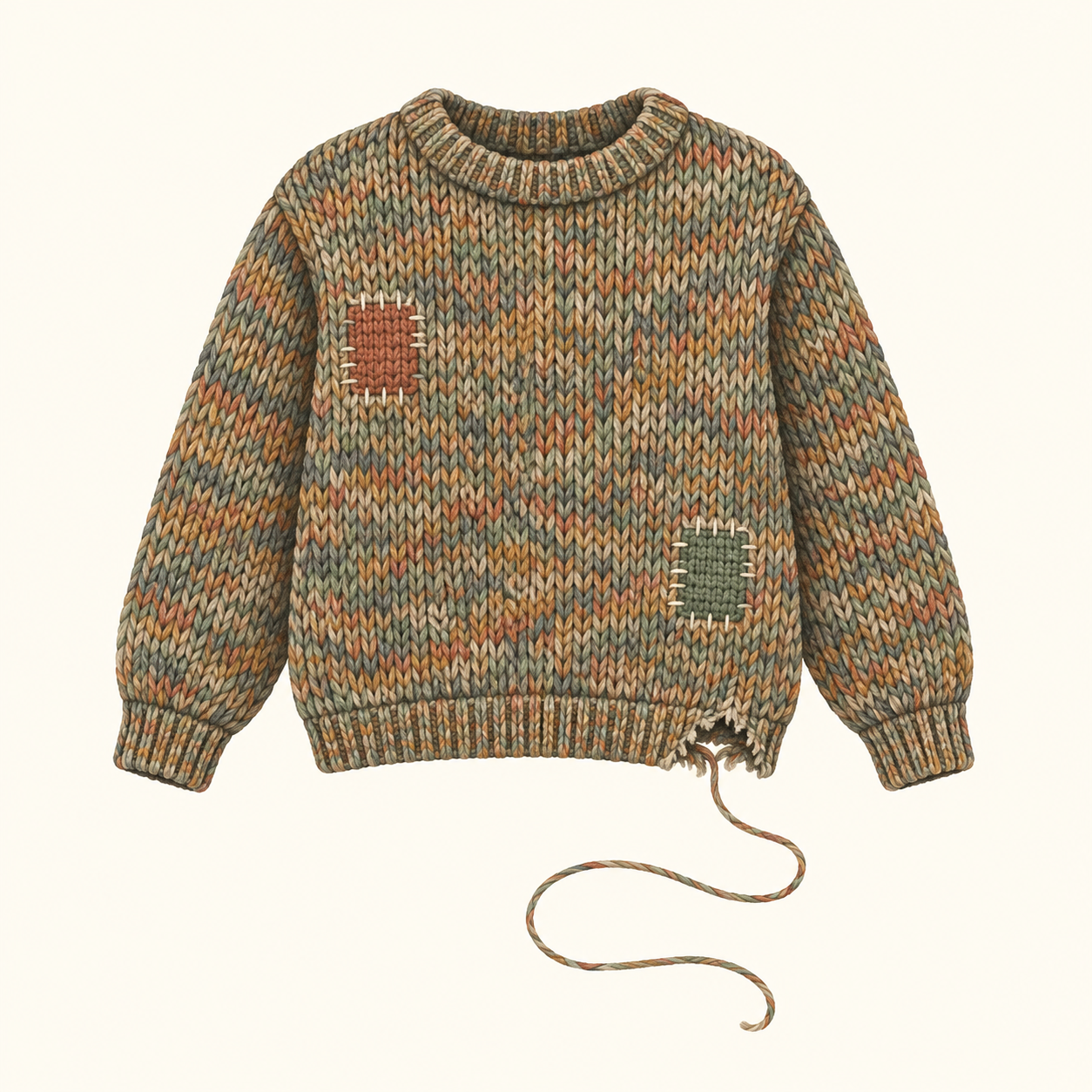
About ten years ago, I began talking about the fabric of society as though it were actual fabric. I offered my students this analogy: If we begin to see society as a sweater, what yarn is that sweater made of?
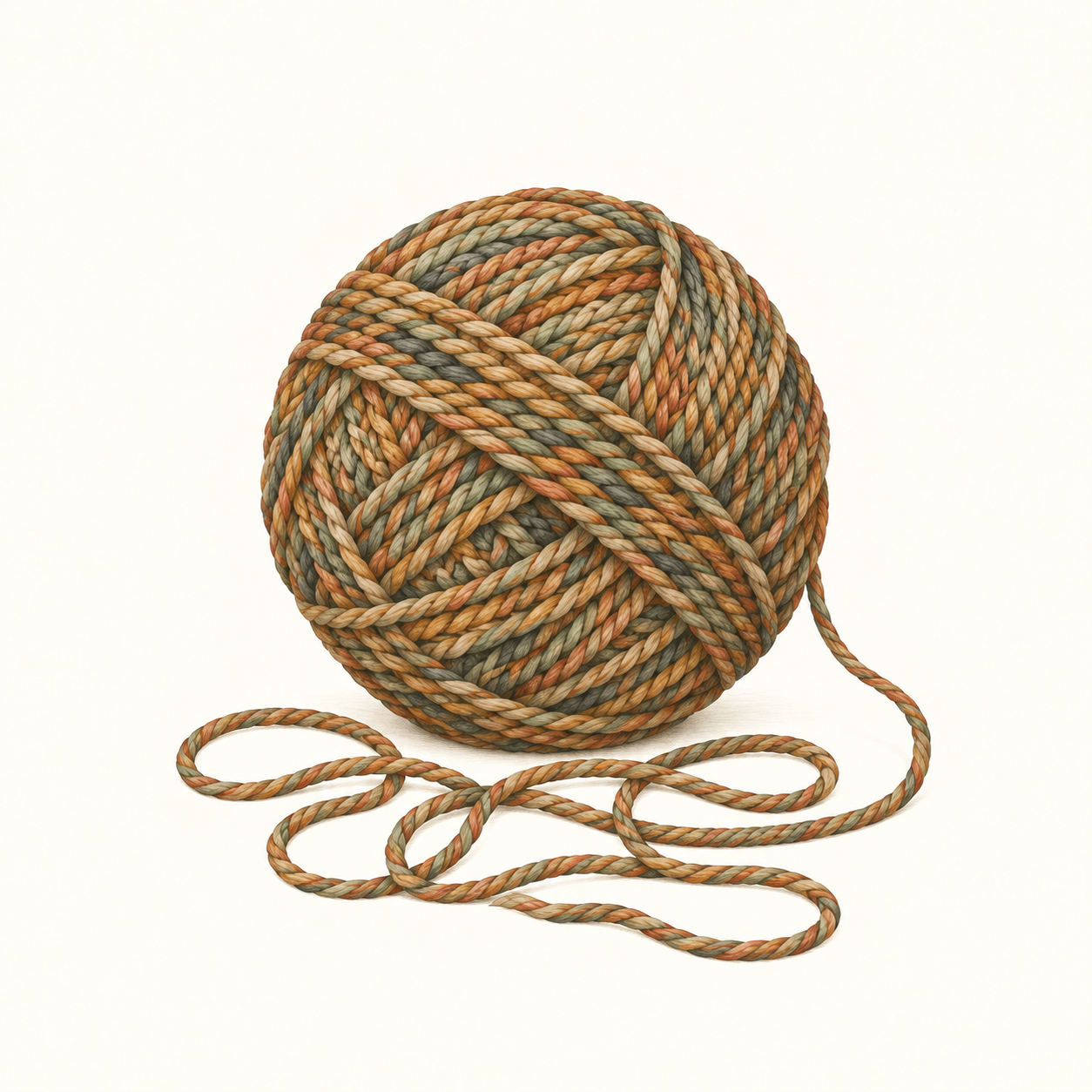
Certainly, the yarn includes positive things: care, community, creativity, cooperation, and our capacity to connect with one another. However, also woven into that same sweater, but often ignored, are racism, sexism, homophobia, transphobia, classism, religious intolerance, ableism, ageism, and other forms of oppression, along with their corresponding experiences of privilege. These threads are woven through our institutions, our relationships, our assumptions, and our everyday practices.
But, every once in a while, the sweater frays. A string hangs loose, making something visible that we might otherwise overlook or choose not to examine.
One clear example is the all too frequent individual instances of police brutality that become visible strings. Even if we only consider the very public murders between 2020-2023 of Breonna Taylor, George Floyd, Renardo Green, Tyre Nichols, Philando Castille, and many more – too many to name here - for example, exposed something about the way racism is built into the fabric of society. These highly publicized murders did not create the thread in the sweater, but rather, they made a thread that was already there painfully visible.
Unfortunately, when it is one of our favorite sweaters, we often respond by cutting off the fray. We remove the hanging string without investigating what it is connected to.
Specifically following George Floyd’s murder, organizations, institutions, and individuals began having conversations about race, racism, and anti-racism. There were statements, commitments, trainings, and promises. Some of those efforts led to meaningful changes. However, where the response stopped at acknowledgment or a temporary initiative, we effectively cut the string while leaving the sweater intact.
Racism continued. Police brutality continued. The fabric that made those experiences possible remained. Yet, when questioned about the sweater, the response could become, “But we did something about that.” We had a conversation. Individual police officers were put on desk duty or let go. We offered a training. We released a statement. We cut off the hanging string.
But when we look closely at the sweater, we see the holes. We might even see patches. We may see all the ways we have attempted to preserve the sweater, even as evidence of its harm becomes harder to ignore. And when some of us ask about those holes and patches, we are warned against pulling the string. Pulling the string, we are told, could unravel society.
But what, exactly, are we being asked to preserve?
Pulling the string would require us to investigate our own internalized racism, sexism, homophobia, transphobia, classism, religious intolerance, ableism, and ageism. It would require us to examine what we have learned to consider normal, whose experiences we have learned to dismiss, and which arrangements benefit us enough that we hesitate to question them.
It would also require us to look beyond individual beliefs. We would have to examine policies, procedures, practices, and outcomes. We would have to ask how institutions distribute resources, whose labor is valued, whose knowledge is recognized, whose safety is protected, and whose suffering is treated as an acceptable cost of doing business.
Pulling the string would allow us to see how systems of oppression are inextricably linked. Their histories and consequences are seemingly distinct, but they reinforce one another. They help establish who is entitled to authority, who is expected to serve, who deserves protection, and who can be exploited.
Pulling that string would require us to locate capitalism in the sweater. In my analysis, the pursuit of maximum profit creates a powerful incentive to exploit labor and maintain unequal access to resources. Racism and patriarchy help make that exploitation appear natural, deserved, or necessary. They provide “reasonable and natural” explanations for why some people should have more and why others should be expected to accept less.
When a system depends on oppression and exploitation, unraveling the sweater means making significant changes to the fabric of society. It means reconstructing the systemic apparatus, reconsidering how power operates, how resources are distributed, and what we are willing to prioritize in the interest of people.
And that work is hard.
It asks something of us beyond recognizing that a hanging string exists.
It asks that we do more than cut the string and patch the sweater.
This may be our favorite sweater, but our favorite sweater scratches us. It chokes us. It restricts our movement. For some, it offers warmth while leaving others exposed. And rather than responding in ways that allow us to experience comfort, safety, and care, we respond in ways that allow us to experience consistency. We preserve what is familiar, even when what is familiar harms us.
I tell my students that I am not a fan of simply cutting off the frayed string. I am a fan of pulling it and seeing what comes next. Slowly pulling and asking: What is racism tied to? What else moves when we tug here? Who benefits from keeping this thread in place? What would we have to change if we followed it?
It is my belief that racism is inextricably linked to patriarchy. It is my belief that patriarchy and racism are inextricably linked to capitalism. It is my belief that these systems are sustained, in part, by what I describe as idiocracy: the normalization of refusing to question, discouraging critical thought, and dismissing knowledge that threatens the existing arrangement. And it is my belief that exploitation runs through all of these threads.
So rather than cutting off a single string while keeping the tattered sweater intact, let’s tug a little. Let’s see what it is connected to. Let’s ask what we are protecting and what that protection is costing humanity. What is the cost to us?
Let’s consider what we could create if we tugged at the string, deconstructed the sweater, examined the yarn, and be brave enough to change the fabric.
JMO
October 23, 2026