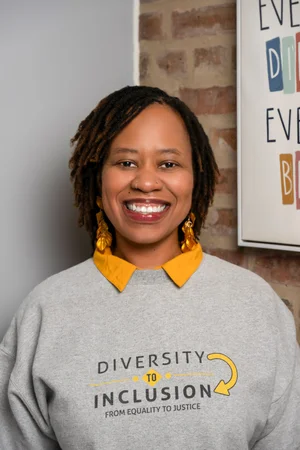
I am Jessica Larry Oladapo, daughter of James Larry and Janie Larry, granddaughter of Bessie Forte Williams, great-granddaughter of Johnny and Sadie Forte, great-great-granddaughter of Willie and Amy Fort, and great-great-great-granddaughter of Matt Fort, who was born into enslavement in Northeast Texas.
I know these names because my father has spent decades making sure we would know them. I have seen them stretched across computer paper, written into family trees, printed on census records, and carved into cemetery stones. Through his work, they have become people whose lives I can begin to imagine and whose connections to me I can trace. I often wonder about these names and think of their laughter and their joy alongside their grief and longing. I, and my generation, are their wildest dreams. And they live in mine. They are beautiful ghosts, brought to life by my father.
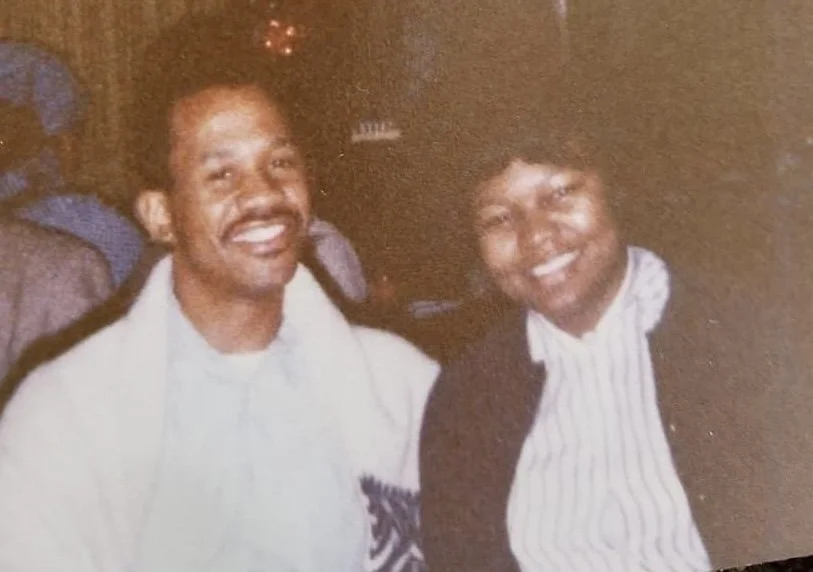
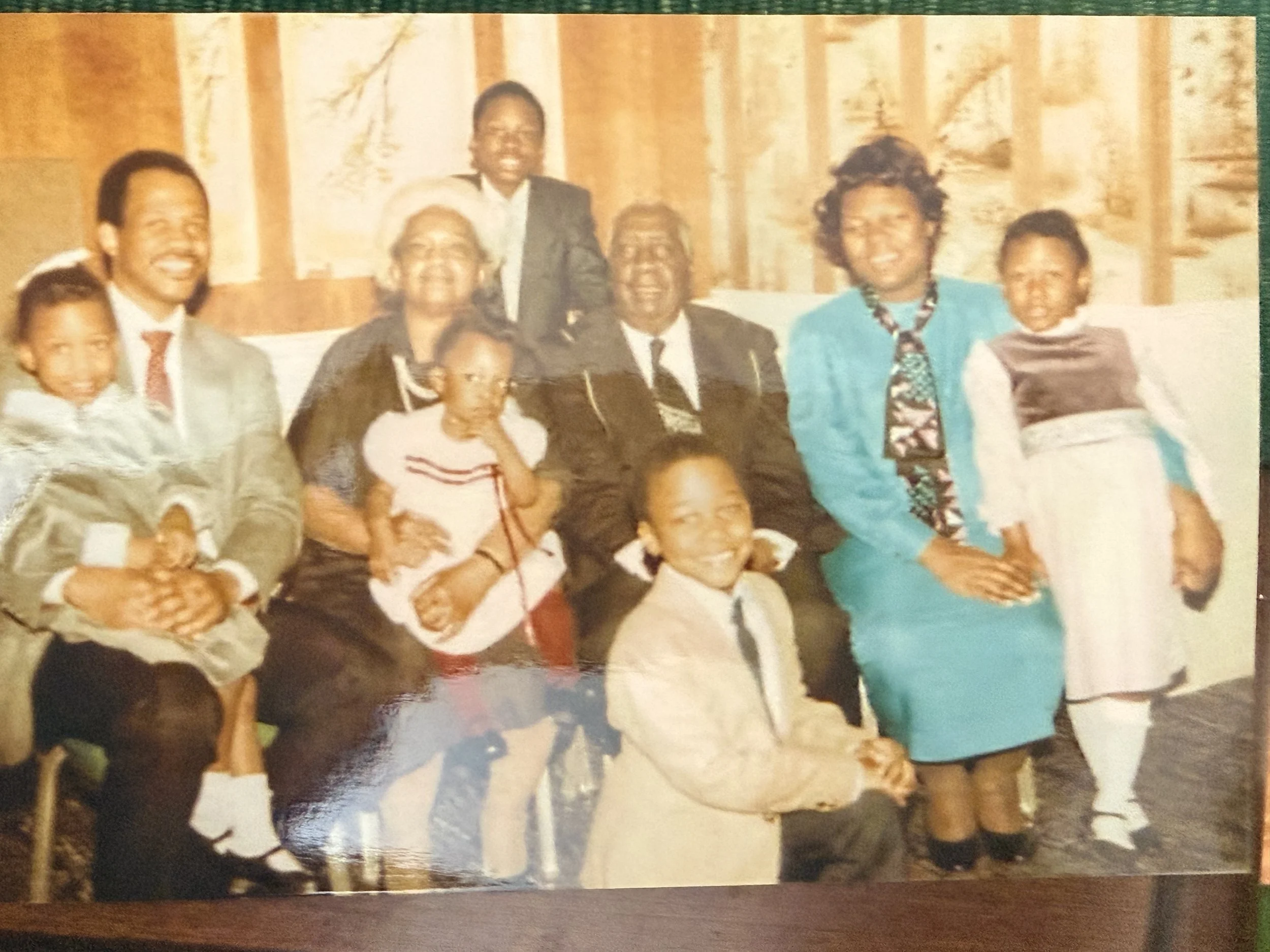
My Mom and Dad in the 1980s.
My father has always seemed larger than life.
As a child, I thought he was gigantic: tall and broad-shouldered, with a thick, dark mustache and sometimes a small goatee. He occupied an enormous place in my world. As I have grown older, I have come to understand how much of that presence comes from the care he gives to people, including those who are no longer here.
One part of that story begins in December 1985, when his grandfather, Johnny L. Forte, died. My father traveled with his mother from Chicago to New Boston, Texas, to bury him.
My grandmother had spoken often about New Boston. Because many people did not know the small town, she would explain that she was from near Texarkana. My father had grown up hearing about this place, but his grandfather’s funeral was his first visit.
At his grandfather’s funeral, he recalled something that felt unfamiliar. At the funerals he knew in Chicago, the casket would be placed in a hearse after the service and driven to a cemetery. Here, the pallbearers carried his grandfather out of Arkadelphia Baptist Church and walked him directly to his gravesite in the adjoining cemetery. My father was one of those pallbearers.
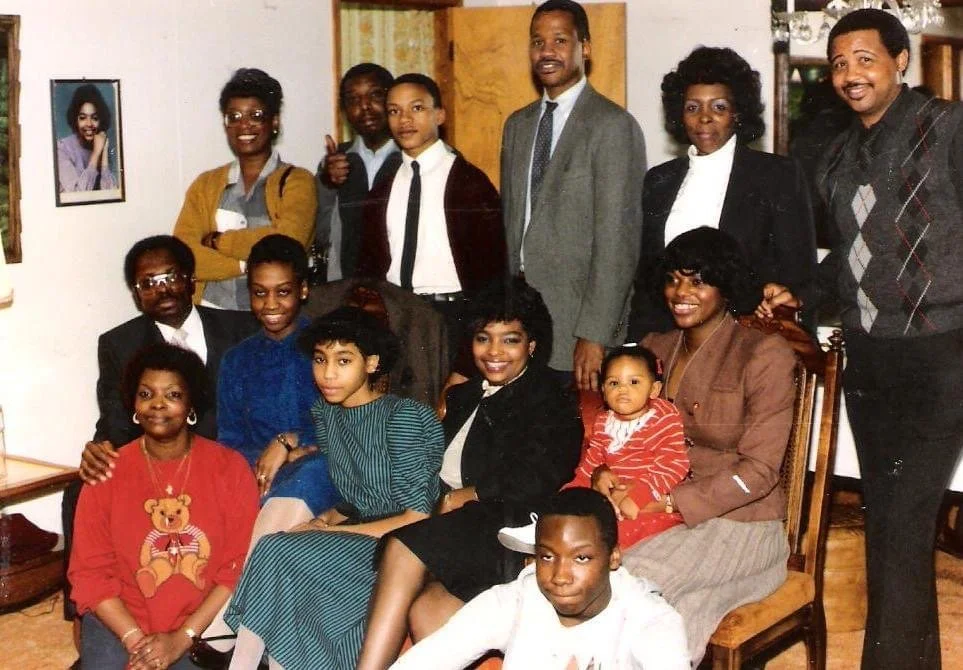
There are photographs from that gathering: my grandmother and her siblings burying their father, and members of my father’s generation standing alongside them. I have seen those pictures many times. Although they were taken in the 1980s, they have always felt like images of a time much further away.
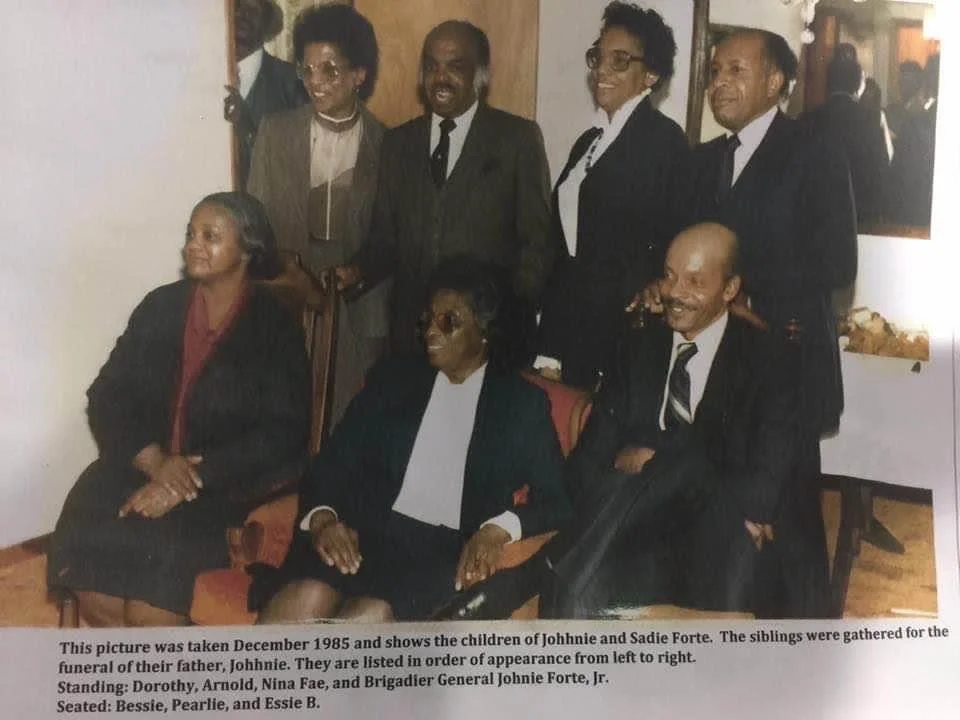
As I remember it, that experience helped ignite something in my father. He wanted to know more about the people who had come before him and the place his mother had carried with her to Chicago.
In the late 1980s and early 1990s, before the internet made so much information accessible from home, he traveled by train to Northeast Texas. He spent hours in libraries and offices, searching through microfilm and microfiche, birth certificates, death records, and census documents. He gathered names and dates, located photographs, and worked out how one person connected to another.
I remember a family tree printed on long computer paper that stretched several feet. It began with the earliest census records he had located for our family in Northeast Texas. Some family members were classified as “M” for mulatto; others were marked “B” for Black. In later records, those classifications changed. Even within our family documents, I could see how race had been assigned and recorded across generations.
There were other changes to follow, too. Our surname appeared as Fort in earlier records and Forte in later ones. My father learned to follow the people across those variations, looking for the relationships that a spelling alone could not explain.
During those years, I also remember his interest in Alex Haley’s Roots, Roots: The Next Generations, Roots: The Gift, and Solomon Northup’s Odyssey. These stories brought the experiences of enslavement, separation, survival, and perseverance into our home. My father was also searching for the particular people and places that belonged to our own story.
As soon as DNA testing became available to him, he submitted his specimen, hoping to trace our ancestry back as far as he could go. His search continued, reaching beyond the documents he could find in Texas.
Over the years, he returned there again and again. He visited with the ghosts of the past in cemeteries and met relatives of the present in homes and restaurants. He took calls from strangers who shared a surname and wondered whether they were family. He assembled books and photographs and helped people understand where their histories met.
Our family applauded him for the detailed history he was creating. But the meaning of his work became clearer to me when I began to recognize myself within it.
When my great-aunt Dorothy died in 1999, relatives came north from Northeast Texas. That was when I met Cousin Van. He took one look at me and said, “She looked like Sadie.”
Sadie was my grandmother’s mother. She died in 1939, at only thirty-nine years old, long before I could have known her. Yet someone could look at my face and see hers.
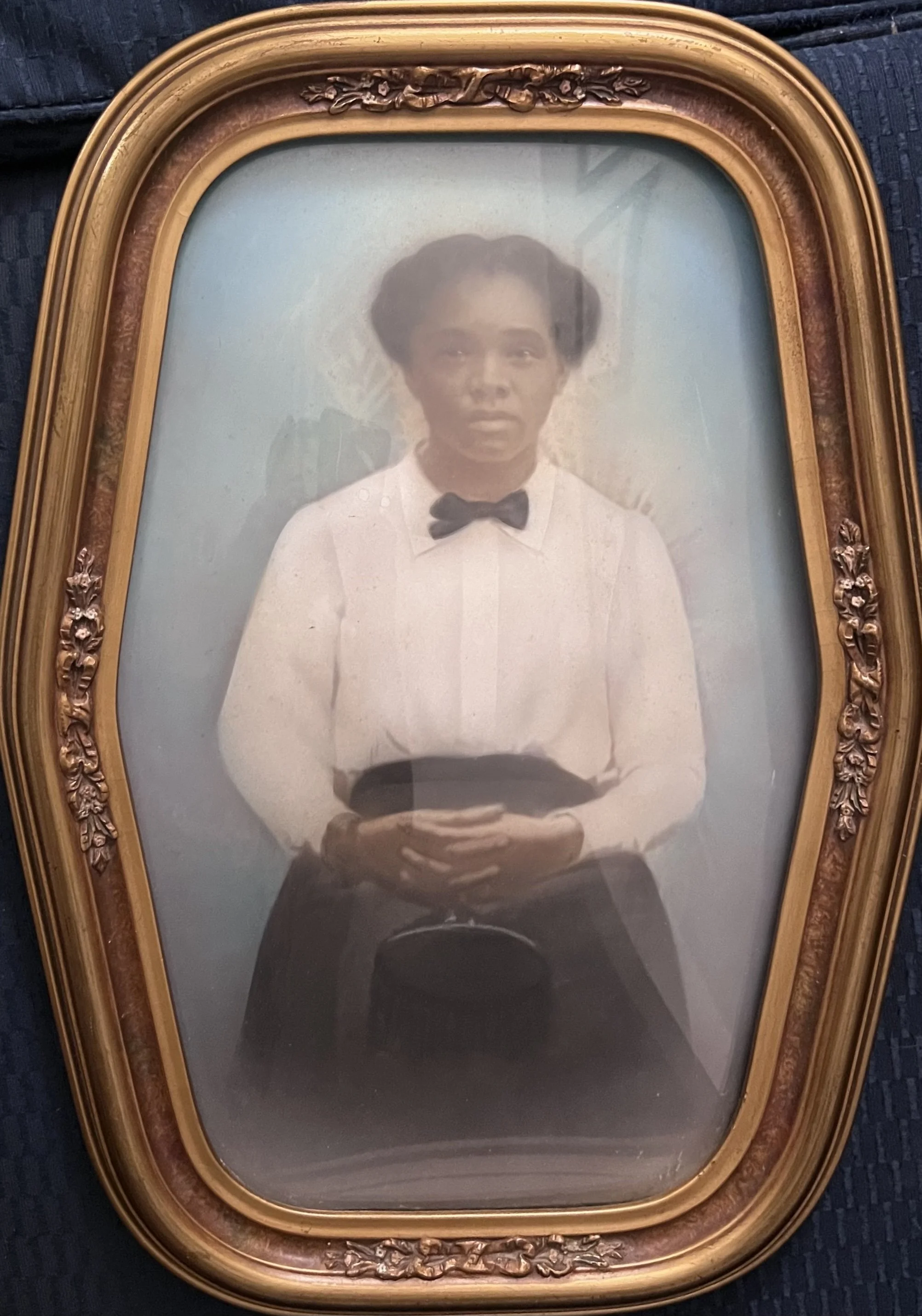
There was loss in that moment, but there was connection, too. It was an honor to realize that I moved through the world carrying the face of a woman whose life had helped make mine possible.
In October 2023, my partner, my parents, and I traveled to Northeast Texas to capture photographs and footage of our family’s history. My partner is a photographer. Through his camera, we could preserve my father in his element, telling the stories he had spent so much of his life gathering.
We paused in Dallas before continuing to Texarkana, New Boston, Hooks, and Arkadelphia. We visited my father’s maternal aunt Faye, my grandmother’s only remaining sibling, who had turned ninety that year. We spent time with cousins Joyce and Adrienne. Cousin Joyce gave me an heirloom portrait of Grandma Sadie.
The woman whose face someone had recognized in mine now had a place in my home.
We stopped at the state line in Texarkana, taking photographs where Texas and Arkansas meet. We also visited the train station from which my grandmother had left for Chicago in the 1940s.
My father told the story of his own father, Johnie Bob Larry, traveling north to meet a sister he had not known. Once he arrived, she encouraged him to stay because there was work in Chicago. He eventually sent for my grandmother and their two small children.
I stood at that station imagining her boarding the train, leaving the place she knew for a city she had never seen. What must she have carried? What did she hope to find? What did it mean to leave family behind while trying to build a life for her children?
Years later, her son would travel that route in the other direction, searching for the history she had left in Texas.
At Ardelia Baptist Church, my father showed us where she had worshipped as a child. Nearby had stood the school she attended, a frame building that served children across grade levels. The church, the school, and the cemetery held so much of our family’s life in one small place.
Then he began moving from stone to stone.
He told us about Willie Forte and Amy, the parents of Sadie. He spoke of Willie’s father, Matt, who had been born into enslavement and lived to see freedom. He showed us the graves of Sadie’s brothers and explained how the family branches connected.
He also traced Johnny Forte’s ancestry through William Forte to Innis Forte, another ancestor who had been enslaved. Both of my grandmother’s parents had been Fortes. My father had spent years learning to distinguish and connect those two branches.
He stopped at the graves of Johnny and Sadie, the grandparents whose stories his mother had carried. Then he spoke about Aunt Pearlie, his mother’s older sister.
Whenever my grandmother had a baby, Aunt Pearlie would travel by train from Texas to Chicago to help. With a growing household to care for, my grandmother needed support, and her sister came. She stayed until my grandmother was back on her feet.
Listening to him, I could hear how the family history he documented was also a history of people showing up for one another.
His research included questions that remained unresolved. Death records had led him to the Tapp family and to an account of Amy’s parentage that had rarely been discussed. He shared what he had found while acknowledging what he still did not know. There were silences in our history alongside the stories people had preserved.
During that trip, his persistence led us somewhere we had never been able to go before: the land where our ancestors had been enslaved.
One Sunday morning, my father and my partner set out to find a cemetery my father had heard about. When they arrived at the location, it was not where he expected. My father entered a nearby church and explained what he was looking for. One parishioner called on another, who recognized the land immediately. Its current owner also attended the church.
We were invited to visit the next day.
Our hosts met us at the house, and we followed a hidden pathway to a clearing containing the White Fort family’s cemetery. The house and quarters associated with the old plantation had been torn down or damaged by time and weather. Some structures remained.
Our hosts were descendants of the people who had held our ancestors in enslavement.
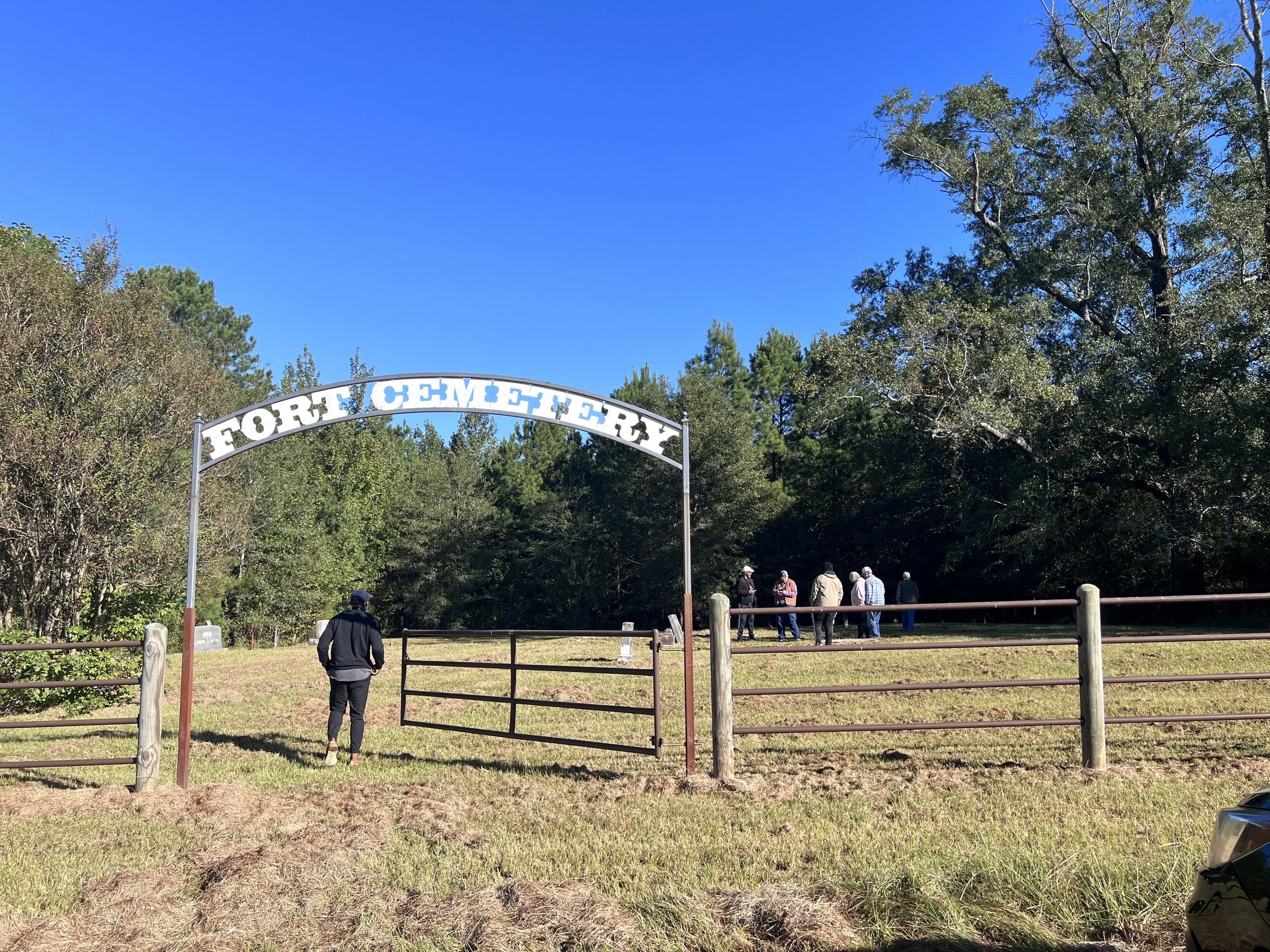
They welcomed us graciously. We stood together as two families connected to the same land through profoundly different histories. Their kindness in the present existed alongside the reality of what had happened there. There was familiarity but also discomfort. The descendants of the people who held my ancestors in enslavement attempted to focus on the well-kept land and the famous connections to maneuver around the family connection. And it was fine. We knew.
I touched the soil and the grass. I looked up into the sky and felt the sun on my skin, thinking of the people who had labored beneath it.
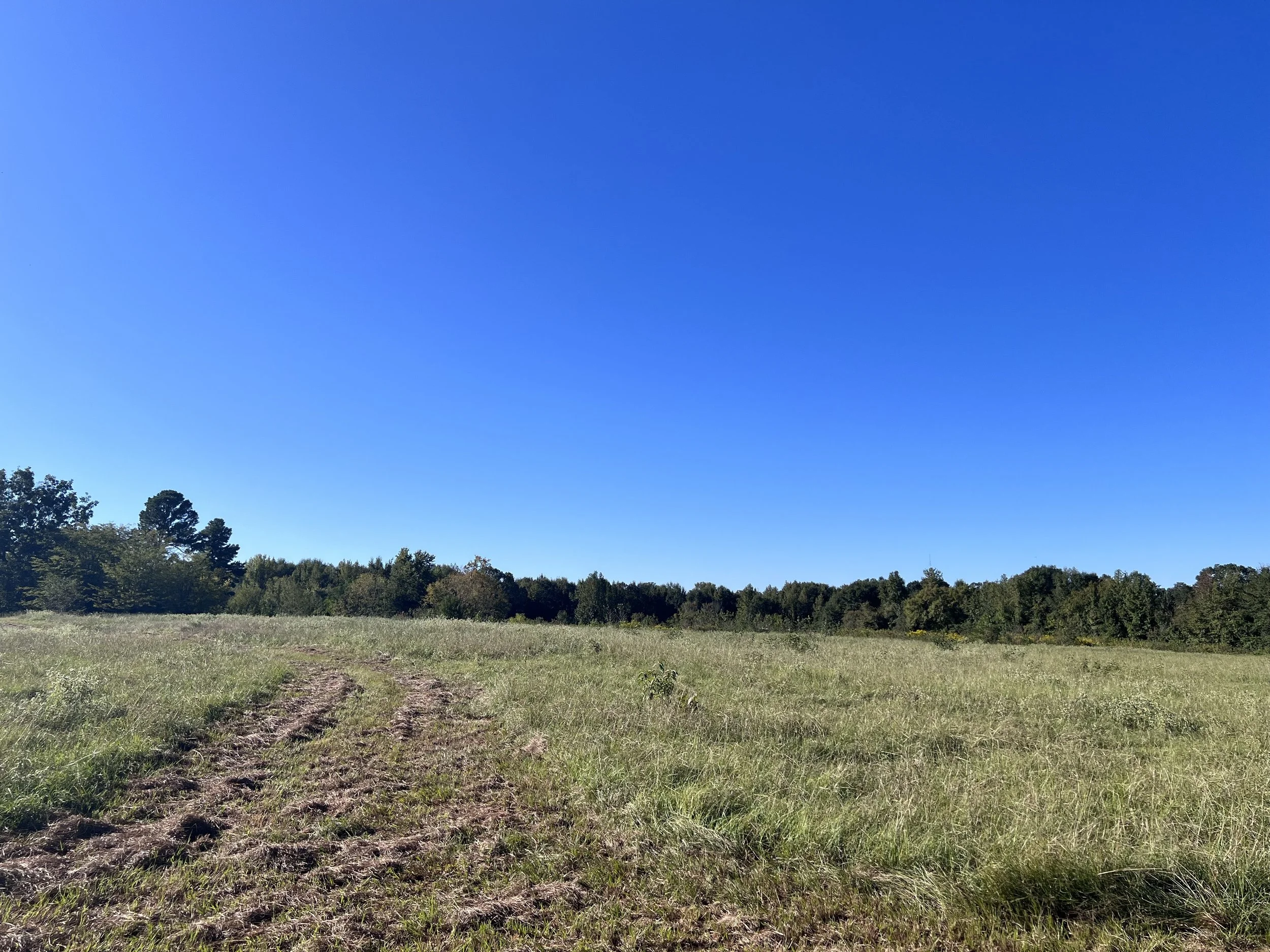
For a moment, the sense of loss I had often felt gave way to connection. I felt held by my ancestors.
My father had found the place.
Standing there, I wondered what those ancestors had dreamed for the generations who would follow them. I cannot know all their hopes, but I imagine rest among them. Care. Compassion. The chance for their descendants to live without having to labor as they had.
I hope that the life I build honors those possibilities. I hope my descendants inherit room to rest and people who care for them. Perhaps some will carry my face, and perhaps, through mine, they will carry Grandma Sadie’s.
When I think about my father’s search, I also think about the care I have witnessed throughout his life.
He has loved, and continues to love, my mother in a way that has given me the best example of loving partnership I could have imagined. Together, my parents have taught me commitment, connection, humility, and service. Watching each of them love their siblings taught me how much those relationships matter.
The first time I remember seeing my father cry was when his mother died. His grief did nothing to make him smaller in my eyes. It gave me a fuller understanding of the man I had always seen as so strong. Masculinity could be emotional, soft, and compassionate. My father showed me that.
I watched him care for my grandfather, who was not always kind to him. One of my earliest memories of my grandfather was painful because it was the first time I had seen anyone disrespect or be mean to my father. It unsettled me deeply. My father did not retaliate. I still think about that moment and the care he continued to give. My father, a man larger than life, cared for his own father when my grandfather could not care for himself.
The more I reflect on his life, the more I recognize the connection between the way he loves his family and the way he preserves its history. He pays attention. He listens. He returns. He gives his time.
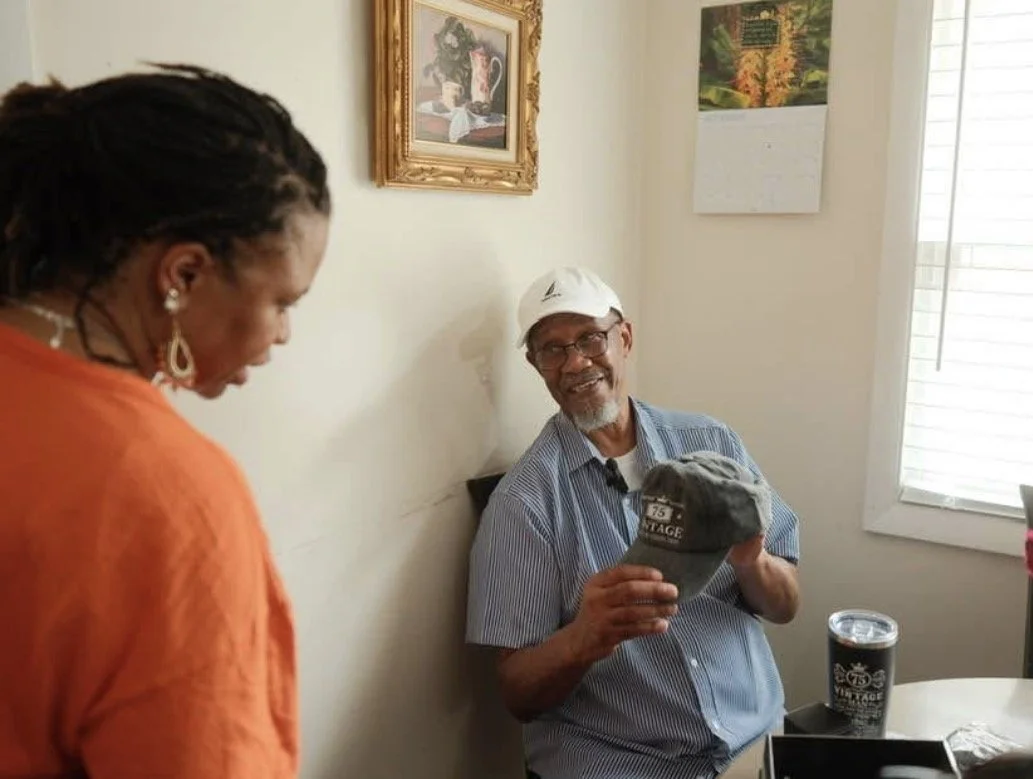
For his seventy-fifth birthday, he gathered his siblings, children, and grandchildren and took us to the places in Chicago where the family had lived. He told stories and recalled memories, bringing those places to life for the generations standing beside him. We had good food and good fellowship. We spent time together, remembering and making memories of our own.
That gathering was another expression of the work he has done for so much of his life. He brought us into the history he remembers and gave us an experience we could carry forward together. His siblings, children, and grandchildren became part of one another’s memories of that day, connected through the stories he shared and the time we spent with him.
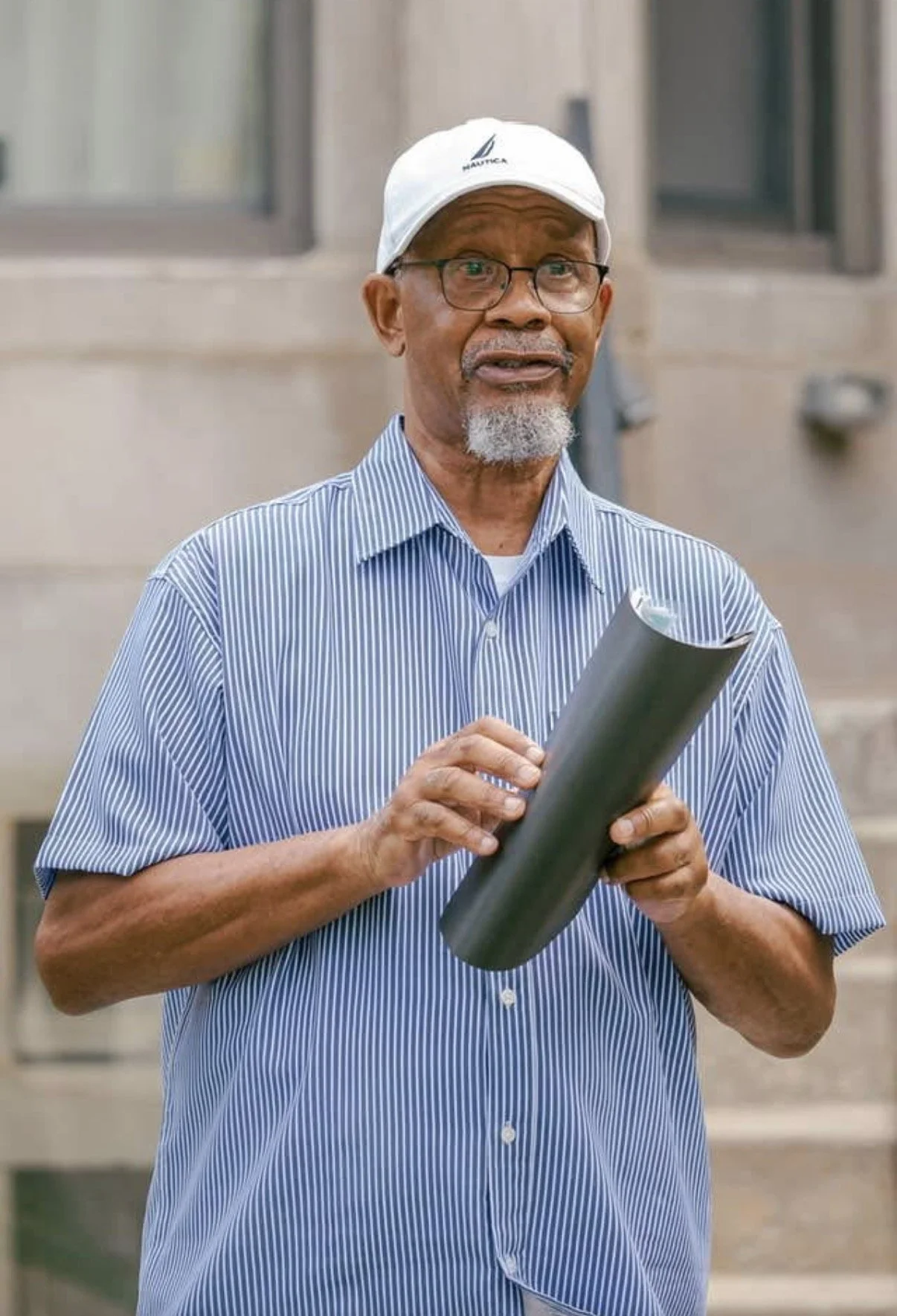
My father has created connections with the past, strengthened relationships in the present, and left a record for the future. As he ages, I am grateful that we have photographs and recordings of him doing this work. We can hear his voice, see him pause at a gravestone, and watch him explain how we belong to one another.
In the spirit of the griots, he carries our stories forward.
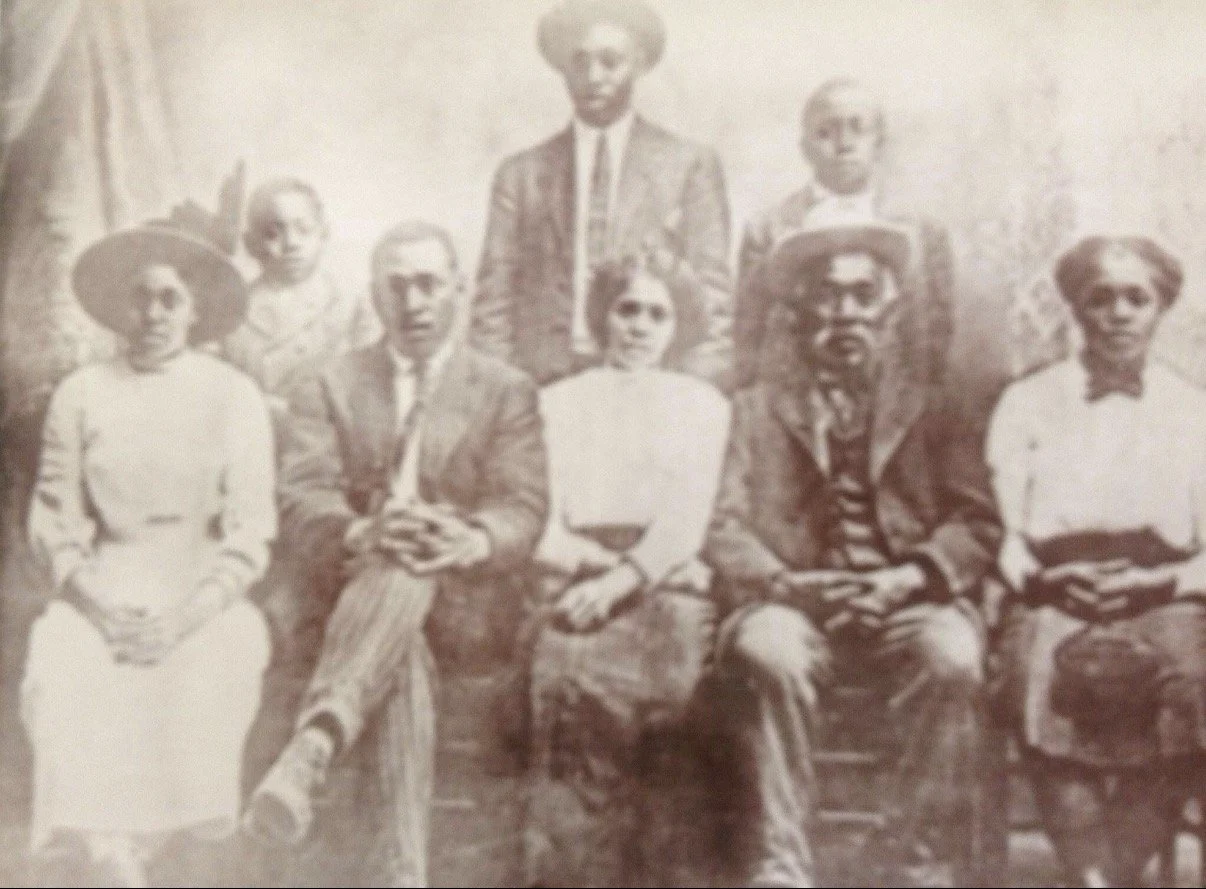
He is also a beloved part of the story he tells.
He is a pivotal part of the history of the Fort/Forte/Larry family. His place in that history is present in every connection he uncovers, every story he keeps alive, and every opportunity he creates for us to remain connected. He finds the relationships that time and distance have obscured, nurtures the ones we have today, and helps those connections continue into another generation.
The history he explores includes his own life: the homes he remembers, the siblings he grew up with, the family he and my mother built, and the children and grandchildren who now carry those memories with them. As he teaches us about the people who came before us, he is also giving us a history of him. His love, his persistence, and his presence are part of what we will pass on.
Someday many years from now, I hope, when he is gone, his books, photographs, records, and recordings will remain. So will the connections he helped us make and the lessons he taught us through his life.
I want him to know that I see him there, within the family tree he has spent so many years building. I see the son who loved his mother, the husband who loves my mother, the father whose tenderness expanded my understanding of strength, and the man who keeps returning so that fewer of us will be forgotten.
He has helped us remember who we come from.
We will remember him, too. He will always be, while he is here and for generations to come, a principled man, larger than life, with a long memory, and immeasurable love for his family.