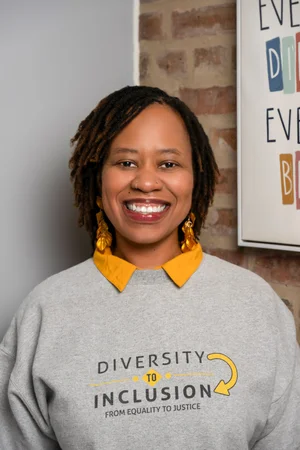
My interest in belonging is both intellectual and personal. I approach this work as a Black woman, sociologist, educator, therapist, and scholar whose experiences in predominantly white academic spaces shape the questions I ask. My work in diversity, equity, and inclusion informs my attention to whose presence is welcomed, whose knowledge is legitimized, and whose contributions are valued. I study belonging because I want to understand the conditions that support connection for others and because I continue to negotiate my own belonging. Acknowledging this investment is essential to being honest about my research. I also acknowledge that my own identities impact my understanding of belonging. I see myself primarily as a Black Woman, with other identities informing and being informed by how I experience my Black womanhood. The tension that exists through that lens, having to hold marginality as a significant part of my experience shapes how I see efforts toward belonging.

Patricia Hill Collins’s Black feminist thought provides a foundation for locating myself within this inquiry. Her concept of the “outsider within” helps me understand the tension of participating in an institution while remaining positioned at its margins. Collins identifies Black women’s self-definition, the interlocking nature of oppression, and the significance of Black women’s cultural knowledge as central themes in Black feminist thought. These ideas resonate with my experiences of racism, sexism, and perceived classism within academia, where professional participation does not necessarily bring recognition or belonging. However, belonging may exist in the classroom while not in the broader campus community. I sit with this inquiry, “what does belonging then mean if marginality and minoritization shape the experience and felt sense of belonging?”
Black feminist thought also encourages me to consider how power shapes the production and validation of knowledge. Collins’s work connects knowledge, empowerment, and social justice, prompting me to examine whose interpretations become authoritative and whose experiences are dismissed as merely personal. In my research, this means taking lived experience seriously while recognizing that experience requires interpretation and critical reflection. My position may help me notice contradictions that others overlook, but it does not make my interpretations complete or allow me to speak for all Black women. Therefore, it requires that I continue to take a curious stance.
Kimberlé Crenshaw’s framework of intersectionality sharpens this understanding. In her critique of antidiscrimination law, feminist theory, and antiracist politics, Crenshaw demonstrates how treating race and gender as separate categories can obscure Black women’s experiences. Her analysis challenges frameworks that recognize discrimination only when it resembles the experiences of otherwise privileged members of a group. I draw on this insight to understand my position as a Black woman in academia. My experiences cannot always be separated into incidents of racism on one hand and sexism on the other. The interaction of these systems shapes how my presence, authority, emotional expression, and scholarship may be interpreted.
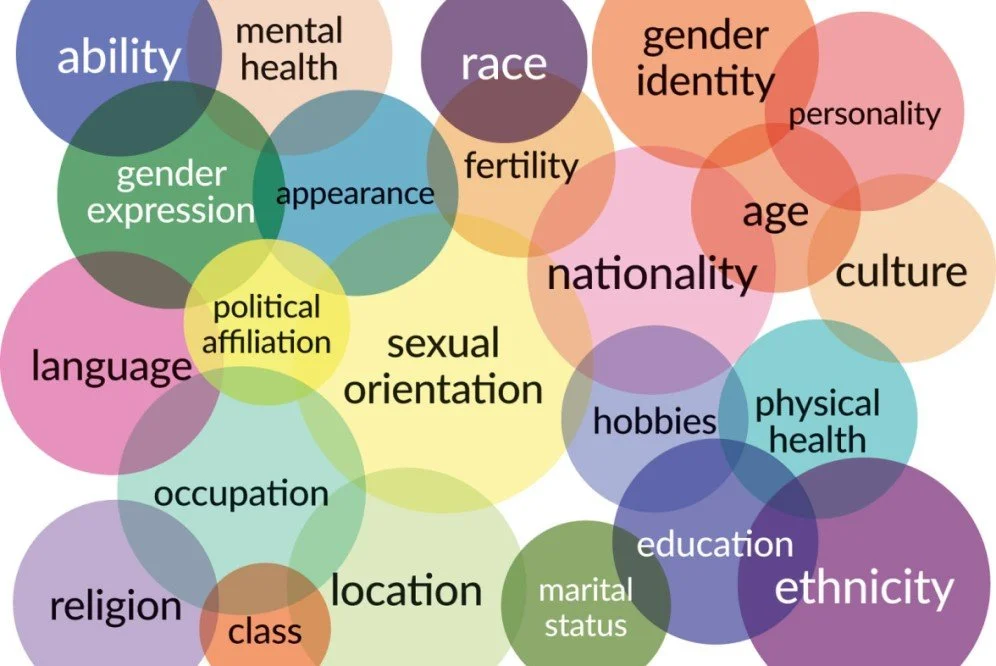
Applying intersectionality to belonging requires me to ask more precise questions about institutional inclusion. An institution may appear welcoming to women while overlooking racial inequality, or claim to support Black faculty while failing to recognize gendered expectations within that support. I therefore want to examine how institutional practices affect people differently and whose experiences disappear when belonging is measured or discussed as though everyone encounters the same institution.
Marxist feminism further informs my attention to the material conditions of institutional life. Marxist feminism asks who benefits and at what costs? Its examination of gender, labor, and capitalist social relations encourages me to consider how institutions organize and value work. Social reproduction theory within this tradition highlights the labor involved in sustaining people and social life, including work performed through education, health care, households, and communities. This perspective leads me to ask who performs the work of creating belonging and what resources make that work possible.
In my role as an educator, cultivating connection involves mentoring, responding to distress, facilitating difficult conversations, and maintaining relationships. I am interested in whether this work is recognized through compensation, workload, advancement, and decision-making authority. Bringing Marxist feminism into conversation with Black feminist thought and intersectionality helps me examine how expectations of care may be racialized and gendered. It also leads me to question whether an institution can depend on someone’s labor to sustain community while failing to support that person’s own belonging.
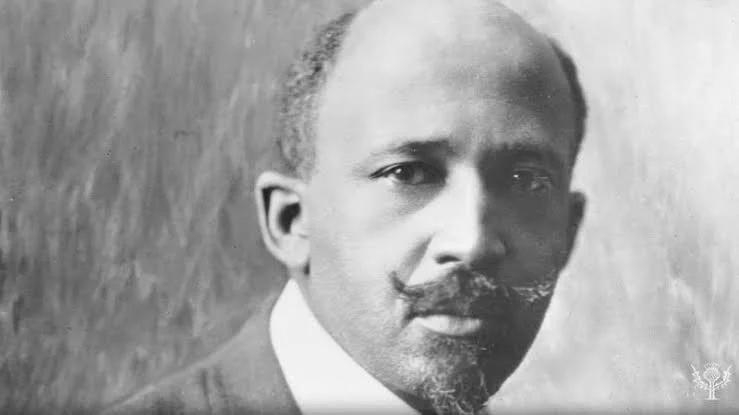
DuBoisian Sociology, rooted in the work of the Father of American Sociology, W. E. B. Du Bois, provides another essential foundation for understanding these tensions. In The Souls of Black Folk (1903), he writes:
“One ever feels his twoness,—an American, a Negro; two souls, two thoughts, two unreconciled strivings; two warring ideals in one dark body, whose dogged strength alone keeps it from being torn asunder.”
Du Bois’s double consciousness describes a racialized tension between self-understanding and seeing oneself through the judgments of a society that denies full recognition. His discussion of the veil and second sight also illuminates how exclusion can produce a particular awareness of the dominant social world. Importantly, his account expresses a desire for a fuller selfhood in which neither Black identity nor American identity must be surrendered.
I draw on this account to interpret my experience of knowing myself as a capable scholar while remaining aware that my competence and authority may be evaluated through racialized and gendered assumptions. This awareness can shape how I speak, when I challenge a practice, and how I anticipate the reception of my work. I understand these connections as my application of Du Bois’s framework to academic life. They lead me to investigate the effort involved in maintaining self-definition while navigating institutional expectations.
Read alongside Collins and Crenshaw, double consciousness helps me consider the relationship between institutional membership and recognition. I can hold a faculty position, contribute meaningfully, and still question whether I am recognized as fully belonging. I can also show up fully in my Black Womanness and wonder if my Blackness or my Womanness will be used against me at times or celebrated at other times. These perspectives also remind me to investigate institutional arrangements rather than locating the entire problem within an individual’s confidence or capacity to adapt.
Du Bois’s assertion in “Criteria of Negro Art” that “all Art is propaganda and ever must be” further prompts me to examine the commitments embedded in representation. Extending this insight to my scholarship, I recognize that selecting research questions and interpreting findings carry ethical and political consequences. My commitment to equity shapes both my identity and my inquiry, and that commitment requires careful attention to evidence, including evidence that challenges my expectations.
My continued presence in predominantly white academic spaces reflects a sense of responsibility. I believe Black students need opportunities to see themselves reflected in positions of intellectual authority, and white students also need to encounter Black professors as scholars and knowledge producers. Yet I continue to ask how I can create belonging for students when I may not experience it institutionally. I must also examine whether my commitment leads me to assume responsibilities that should be shared across the institution.
These experiences lead me to understand belonging as layered. I can feel deeply connected to sociology, experience meaningful belonging within my classroom, and feel less connected to the institution that houses it. Connection at one level does not establish belonging at another. My research therefore attends to the relationships among classroom experiences, disciplinary communities, and institutional structures.
I enter this work with a strong belief that the pursuit of belonging can help explain behaviors that build connection as well as behaviors that reinforce exclusion. I recognize this as an orienting belief to investigate rather than a universal explanation to impose. I will need to examine my assumptions, attend to divergent accounts, and distinguish participants’ meanings from my interpretations.
My positionality includes both marginalization and authority. As an educator and researcher, I influence students’ experiences and make choices about how others are represented. Drawing on Black feminist thought, intersectionality, Marxist feminism, and Du Boisian sociology, I seek to understand belonging through its connections to recognition, labor, resources, and power. My responsibility is to remain transparent about my commitments, responsive to evidence, and accountable to the people whose experiences my research seeks to understand.