
How I Came to Belonging
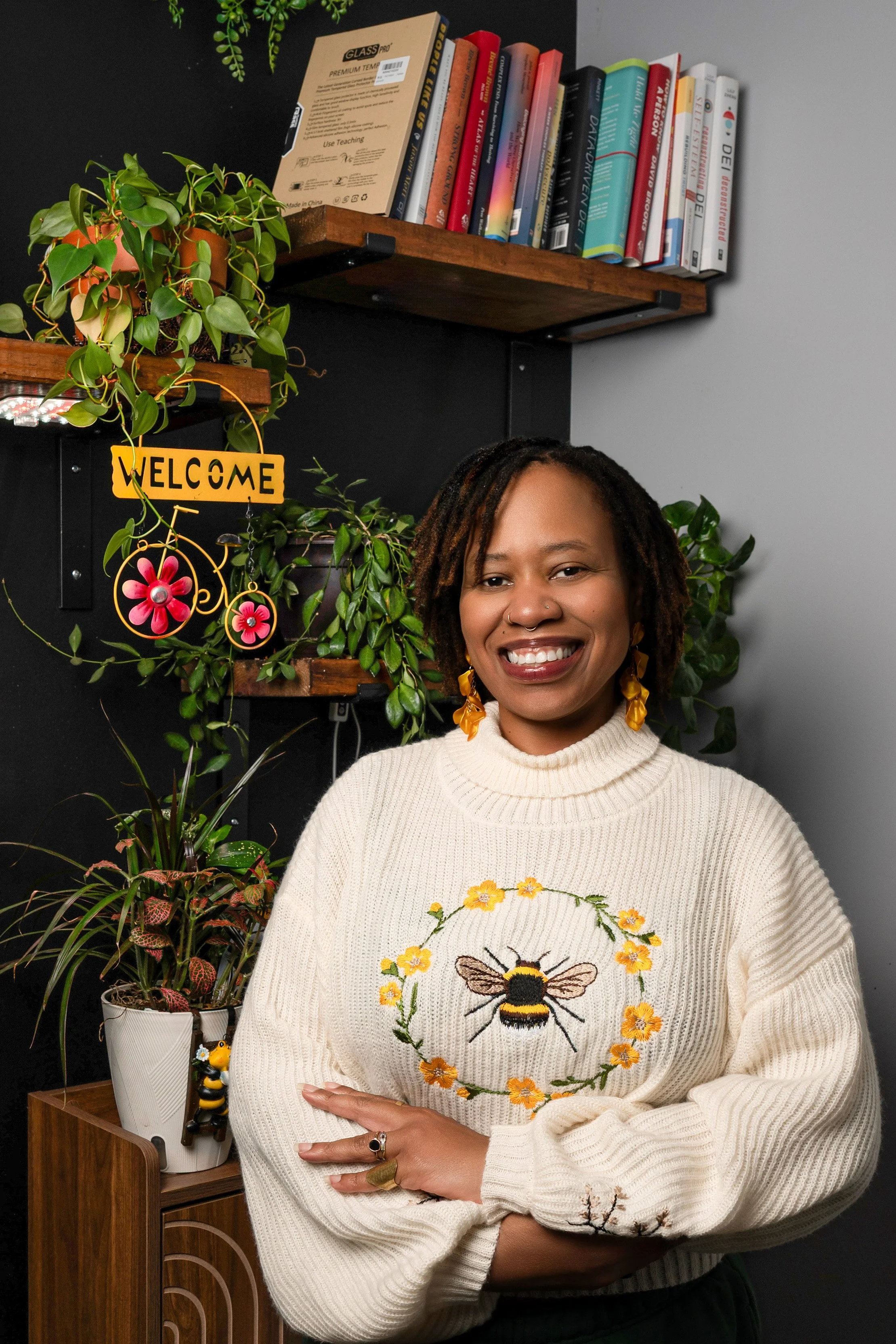
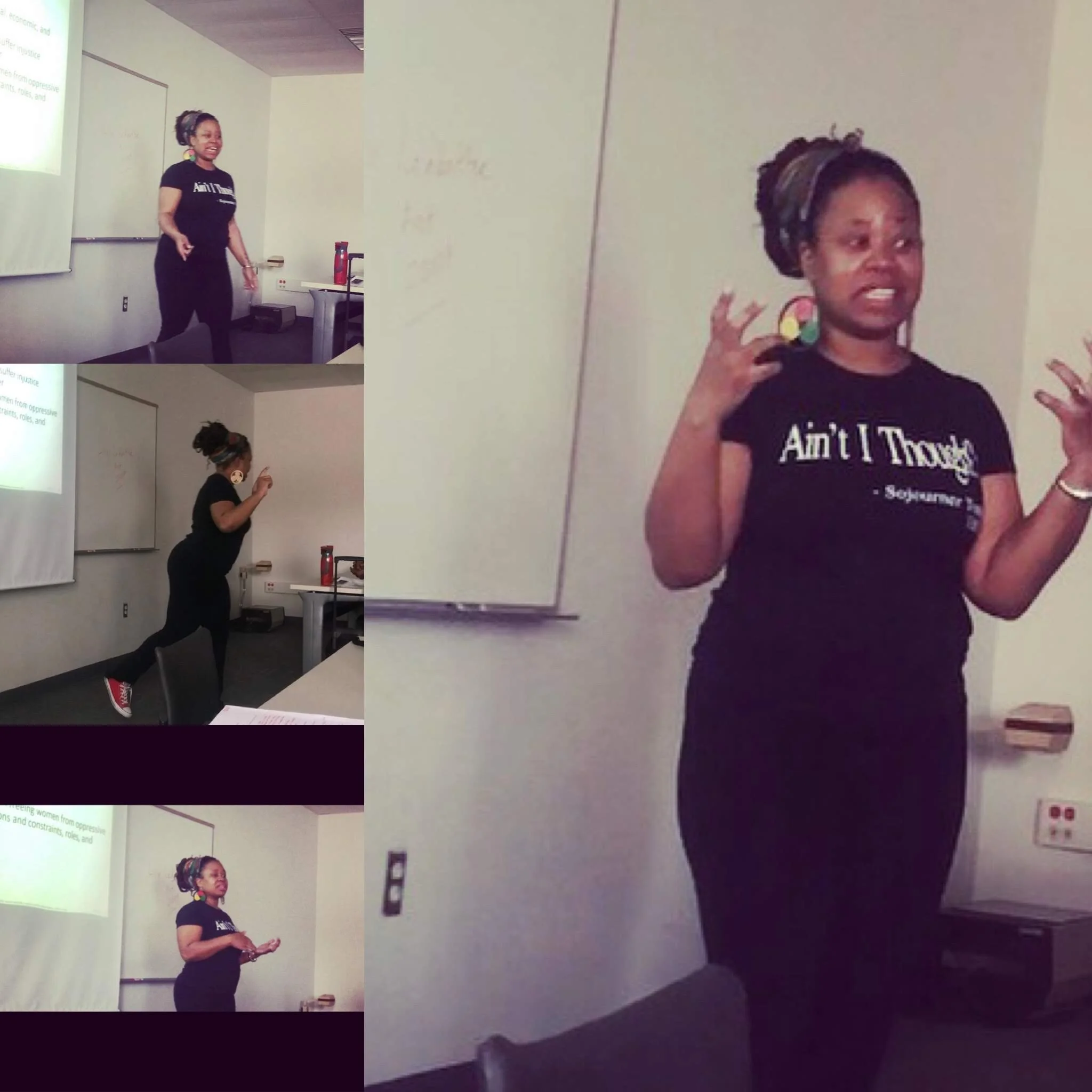
In 2015, I was a well-respected professor of sociology and psychology. I knew the world of the classroom. Its rules and expectations were familiar to me, my relationships were supportive, and I felt part of a solid academic community. I could walk into a room of students and trust my ability to guide a difficult conversation. I felt comfortable there and safe.
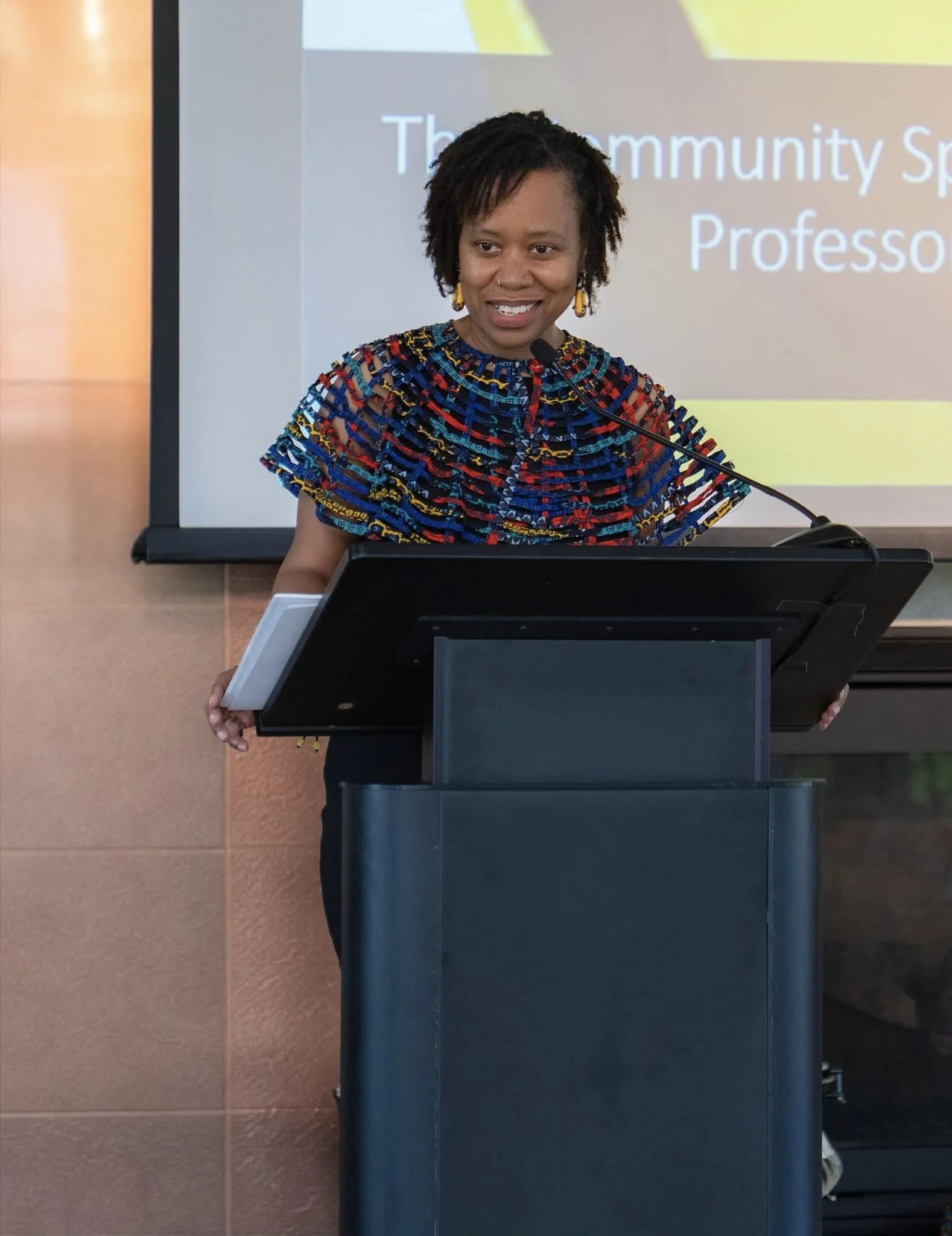
That year, I was asked to lead a few implicit bias trainings. In many ways, these workshops were precursors to what would later be called diversity, equity, and inclusion (DEI) training. People who did not know one another had seen or heard me speak passionately about equity, and they began inviting me to give workshops and keynotes across a range of industries.
I was grateful for the invitations, but I also felt my sense of safety change. The classroom had given me a setting I understood. Now I was entering organizations with their own histories, expectations, and unspoken rules. I began with implicit bias trainings and was soon asked to lead antiracism and antibias work as well. Each invitation stretched me further beyond what had felt familiar.
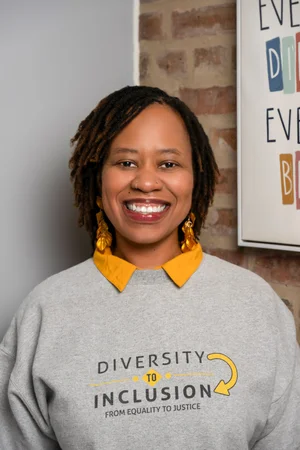
By 2016, I had founded Diversity to Inclusion, Inc., with the tagline was “From diversity to inclusion, from equality to justice.” I enjoyed the work immensely. I kept allowing myself to be stretched, and I poured myself into the research. I wanted to understand the how and the why of this work, the best practices, the business case for diversity, and what might actually help people and organizations change.
You Can’t Start the Conversation in the Middle
Still, something felt amiss. In many rooms, I felt as though I was starting the conversation in the middle. We were talking about bias, racism, and inequity without first attending to the conditions under which people could hear one another, examine their own behavior, and stay engaged when the conversation became uncomfortable. I felt an overwhelming feeling that context was missing.
I continued to read and expand the scope of my work. Eventually, I arrived at a question that changed how I approached these conversations: What happens when people do not feel safe enough to participate in them?
That question led me to psychological safety and to Amy Edmondson’s (1999; 2006; 2018) work. I began encouraging organizations to consider psychological safety as part of the groundwork for difficult conversations. This did not mean that a conversation about inequity should wait until everyone felt comfortable. Comfort and safety are not the same thing. It meant asking whether people believed they could speak, ask questions, acknowledge mistakes, and take the interpersonal risks that learning and change require.
In 2021, I had the opportunity to meet john a. powell. His writing and speaking on belonging and othering gave me language for something I had already been trying to understand. As a sociologist and psychologist, I had spent years thinking about, and critiquing, Maslow’s hierarchy of needs. In particular, I questioned what we mean when we place safety and belonging in separate categories, as though one is was dependent on the other as a building block. I became more curious about the symbiotic relationship of safety and belonging.
Within the context of Maslow, conversations about safety is often understood and discussed primarily as physical safety. Physical safety matters profoundly. But my experience as a case manager and clinician had shown me that people also seek safety through familiarity, relationships, and community, even when their circumstances appear precarious to someone looking in from the outside. I had witnessed people living without what many of us would consider physical safety who nevertheless experienced a strong sense of psychological safety with the people around them. They wanted to remain close to those who offered comfort and connection. Indeed, much foundational psychological research supports this idea – people will forgo physical safety for psychological safety.
During the pandemic, I spoke with a gentleman who was unhoused. He told me he would rather remain unhoused because he knew what to expect, where to go, and who his community was. Importantly, I did not hear him saying that housing was unimportant. I heard him describing the importance of predictability, community, and connection. His words have stayed with me because they challenged any simple assumption I might make about what safety feels like from another person’s position.
I continued paying close attention to the relationship between psychological safety and belonging. Could that relationship help us have the difficult conversations about bias, racism, sexism, and other systems of inequity and power? Could it help explain why some groups were able to examine their practices and change, while others resisted even naming the problem?
By 2023, I had also become a licensed therapist. Always the sociologist, I found myself noticing patterns across the different settings where I worked. My own neurodivergence is part of how I am drawn to and am fascinated by patterns, and the connections were becoming difficult to ignore. Some of what I observed in therapy resembled what I had seen in organizations and other systems. Behaviors that looked puzzling in isolation made more sense when I considered the relationships and conditions around them.
I began to see many behaviors as bids for connection or responses to a lack of safety. A person might withdraw because speaking has carried a cost. Another might seek reassurance because connection has felt uncertain. Someone else might hold tightly to a familiar role because that role has helped them remain accepted. The details differ, but these patterns can appear in a marriage, a family, a classroom, or a workplace.
I also noticed what became possible when people felt safer with one another. They were more willing to take risks, try something unfamiliar, share an idea, or admit they did not know. I could see connections among safety, belonging, learning, creativity, and innovation. I wanted to understand how those connections worked within larger systems.
Belonging Through Othering
From an evolutionary, sociological, and psychological perspective, humans are social beings. As such, all of our behaviors exist within a social context. We get to decide whether those behaviors will be prosocial, or behaviors that consider the interests and well-being of other people, or antisocial, which are the behaviors that work in the interest of self or one’s group while isolating or excluding others. However, because we are social beings, even behaviors that separate us from other people can have some component of getting a belonging need met. We can create connection through the ways we care for others. We can also create connection through the ways we decide who does not belong.
To be clear, I am not speaking of antisocial personality disorder or other pathology. I am speaking of things such as sexism, racism, classism, and the other forms of exclusion that, on one hand, isolate people, but on the other hand, serve as very powerful means of social connectivity. People can gather around a shared belief about who is worthy, who is deserving, who should have access, and who should not. In that gathering, they can experience acceptance, validation, and a sense of belonging. The same behavior that creates disconnection for one person can create connection for another.
This is part of what makes these behaviors so insidious and difficult to change. We are asking people to reconsider beliefs and behaviors that may also be holding their social relationships together. Those beliefs may provide a way to be recognized, accepted, or affirmed within a family, a community, or an organization. Challenging the belief can then feel like risking the connection. A person may remain silent, participate, or defend the behavior because doing otherwise could threaten their own sense of belonging. Sadly, this is what I was often facing during DEI trainings. Sadly, the sense of belonging and connectedness that drives racism, sexism, and the other behaviors and mindsets that lead to othering is powerful.
So, when we talk about belonging, we also have to ask how that belonging is being created. Who gets to belong? What holds the group together? And whose exclusion makes that connection possible? The need for belonging does not automatically lead us to care for one another. We can meet that need through mutual care, respect, and connectedness. We can also meet it by gathering around the isolation of others. The need may be human, but how we meet it has consequences for everyone around us. As such, although we often talk about belonging in a positive way, the need to belong is not inherently positive as it may by necessity lead to othering. The creation of nation states, the continuation of racism and ethnocentrism, nativism and more are examples of this antisocial pattern of belonging through othering. In other words, belonging itself is neutral. Additionally, systems are neutral. However, how power is created, developed, and maintained is not neutral.
By happenstance, I was introduced to the work of Donella H. Meadows, whose writing on systems thinking helped me connect even more dots. Systems shape behavior. At the same time, our repeated behaviors help create and sustain the systems in which we live. We learn what is rewarded, what is punished, what can be said, and what must remain unspoken. We also learn what we need to do to be accepted and remain in community.
Significantly, we do not make choices inside systems as though belonging were irrelevant to us. We respond to the people, expectations, and structures around us. We pay attention to whether we are welcome, whether we can trust others, and what might happen if we take a risk. When people feel psychologically safe within a system, they have more room to participate. They can offer ideas, learn from mistakes, create, and contribute to what that system becomes. Their participation also helps reproduce its norms: what they experience, they may come to expect and practice with others.
When people do not feel safe, they may become less active within the system. They might speak less, withhold ideas, disengage, or leave. If the system itself is harmful, people within it can suffer and lose trust. The system suffers, too, because it loses their participation, knowledge, relationships, and care.
A system driven by coercive power or manipulation may secure compliance for a time. But I question how long it can sustain itself without damaging the very relationships on which it depends. Where people experience alienation, we should not be surprised to see low trust or poor retention. People leave when they can. Those who remain may learn to protect themselves rather than invest fully in the community. For a system to remain healthy and sustainable, it has to be concerned with the people within it.
Coming Full Circle
Creating Safe Classrooms
The systems we build can support that need or frustrate it. When we take belonging seriously, we have to examine both the relationships people experience and the policies, practices, and distributions of power that shape those relationships.
Taken together, this was a eureka moment. This realization brought my earlier work on implicit bias, antiracism, and diversity, equity, and inclusion full circle. Why are we concerned about these things? Why does diversity matter? Why do inclusion and equity matter? They carry weight because they shape the conditions under which belonging becomes possible. People cannot be expected to experience belonging in a system that overlooks their needs, dismisses their experiences, or asks them to bear an unequal share of its costs. We cannot talk seriously about belonging while avoiding questions of power or refusing to examine whose participation the system makes easier.
Over the years, we have devised many acronyms and phrases for this work: DEI, IDEA, DEIB, culture and climate, and more. These terms can help name particular commitments. Underneath them, though, I keep encountering the same human questions. I hear them in therapy. I see them in families and workplaces, in classrooms and institutions, and in the ways nation-states define who is included.
Can I trust the people around me? Is there room for me here? What will happen if I speak? Do the rules apply to me in the same way they apply to others? Will this community make space for my growth, or will I have to make myself smaller to remain part of it?
These questions bring me back to belonging. My work began with conversations about implicit bias and inequity. Those conversations are still incredibly vital. However, now I understand them as part of a larger inquiry into the conditions we create for one another.
Belonging speaks to a basic human need. The systems we build can support that need or frustrate it. When we take belonging seriously, we have to examine both the relationships people experience and the policies, practices, and distributions of power that shape those relationships. We have to ask who feels safe enough to participate, who has been required to adapt to a system built with others in mind, and what equitable change would make fuller participation possible.
The Journey to the Happiest Place… and by that, I mean to Belonging
When I first began doing the work of diversity, equity, inclusion, and belonging, I often described it as a journey. I still do. In my view, the journey to belonging is never complete. There is always more ground to cover, more to learn about the people traveling with us, and more to understand about the conditions that make the journey possible.
Back in 2017, my entire family traveled by car from Illinois to Florida, headed to the greatest place on earth, or, as some might call it, Disney World. We paused at a midway point to rest. We traveled in separate cars, but we had a common destination, and we stayed in communication along the way.
Sometimes one car was an hour or two ahead of the others. If the people in that car encountered heavy traffic or rain, they could alert the rest of us. If they found a good rest stop where we could stretch, gather ourselves, and look at the map again, they shared that information, too. At other times, we met up at a gas station or fast-food restaurant for refreshments and a chance to reconnect before getting back on the road.
Looking back, I see how much that trip depended on our relationships with one another. Each car was its own small system. The people inside had to decide when to stop, how to respond when someone was tired, and what they needed to keep going. Yet, each car was also part of a larger family system. We were moving at different speeds, encountering different conditions, and making decisions from different points on the road. Still, we were traveling together.
I sometimes chuckle when I give this example and ask people to imagine us reaching central Indiana, pulling over, and proclaiming, “We’ve gone far enough. This must be the happiest place on earth.” We would have made progress. We would have traveled a considerable distance from home. But we would not have reached the place we set out to find.
Unfortunately, this is sometimes what happens in the work of belonging. A system or organization begins the journey, travels some distance, and announces that it has gone far enough. We might call that stopping point diversity. People who were previously absent are now in the room, but their presence alone cannot tell us what it is like for them to be there. Do they have a voice? Are they heard? Are the rules and expectations clear and applied fairly? Can they raise a concern without fearing what will happen next? When there is harm, does anyone take responsibility for repair? Do people have the resources and relationships they need to contribute and grow? For some organizations, diversity feels like far enough. Inclusion, equity, psychological safety, and belonging require too much work, too much effort, too many miles. The destination remains on the map, but the organization settles in at a stopping point and begins calling it arrival.

The Happiest Place on Earth: Do we belong?
But, my family did not stop in Indiana. We persisted and eventually made it to Disney World. And when we arrived, we discovered something else. We learned that getting there was only the start of our time together. We still had to check in with one another. We had to navigate unfamiliar terrain and make decisions about where to go next. Long lines, heat, fatigue, and different hopes for the day sometimes created tension. We needed strategies for recovery when we were tired and for repair when we became frustrated with one another. At the same time, we got to enjoy the fruits of our labor. The rides, the sights, the parades, and the shared experience were rewards of making the trip. We could enjoy being there while continuing to attend to one another.
This is how I see the work of belonging. We create the conditions that make belonging possible. We support one another along the way and build trust through repeated actions. We pay attention to who is moving ahead easily, who is encountering barriers, and whose warnings about the road are being ignored. We measure how well we have created the conditions we say we value. Once people experience belonging, we continue the work required to sustain it: care, accountability, safety, consistency, and repair.
Belonging is both the outcome of that work, and it is also a beginning.
There is Still Work After Arrival
While speaking with an educator recently, I was reminded of another question I think we need to take seriously. We were discussing belonging when she chuckled and lamented, “They tell us that if students feel a sense of belonging, our problems are solved. But honestly? That’s not true. So, what happens next? What’s the gap between belonging and engagement?” It was a valid question. An excellent question, actually.
We sometimes speak of belonging as though it is the final outcome. If students belong, they will engage. If staff belong, they will stay. If faculty belong, they will collaborate. However, her question was what happens after someone begins to experience a sense of belonging. One of my favorite questions to ask when teaching is, “And then what happens?”
What happens when a student feels that they are part of a school community but cannot see how their learning connects to their life or future? What happens when a faculty member has strong relationships with colleagues but lacks the time or support to try a new teaching strategy? What happens when a staff member feels valued by their team but sees a revolving door of hiring because the organization has not addressed its recruitment, workload, or retention practices?

A sense of belonging does not erase those conditions. It gives us a stronger foundation from which to address them. If we want engagement, we must pay attention to the opportunities, resources, expectations, and relationships that allow people to act on their connection to a place.
That means asking people what engagement would look like from where they stand. It means offering meaningful ways to participate, being clear about goals, and noticing when someone wants to contribute but cannot find a path in. It means holding ourselves accountable for recruitment and retention instead of assuming that a welcoming message will keep people in an environment that does not support them.
The educator’s question also helps us be more precise about what we measure. Asking whether people experience belonging tells us something essential. Asking whether they understand how belonging connects to the work they do tells us something different. We need both questions, along with questions about what people are able to do, what gets in their way, and whether conditions change when they name a problem.
Keeping the Conditions Alive

The family trip worked because we kept communicating after we left home. An alert about traffic mattered only if the people behind us could receive it and use it. A good rest stop helped only if we were willing to pause. Meeting up gave us a chance to check on one another before continuing.
Belonging requires that kind of continued attention. Trust grows when people can count on what happens next. When an organization says that people can speak honestly, how does it respond when they do? When it promises care, what happens when someone is struggling? When a conflict or rupture occurs, is there a path toward accountability and repair? Additionally, do people feel safe to take the risk of repair?
These repeated experiences shape whether belonging feels real. They also shape what becomes possible because people belong. Can they take a risk, share an idea, ask for help, offer a different perspective, or imagine staying long enough to grow?
I think about belonging as both an outcome and a condition for further growth. We work to create it through trust, inclusion, equity, and connection. Then we ask what it makes possible and what else people need in order to participate fully. We remain responsible for maintaining the conditions even as we enjoy their benefits.
My family arrived at Disney World, but our shared destination did not relieve us of the responsibility to care for one another once we got there. In many ways, it gave us more opportunities to practice that care. We could enjoy the rides and the parades while still checking in, changing plans, and finding our way back to one another after a difficult moment.
That is the journey I want us to imagine when we talk about belonging. We cannot declare victory because we have traveled farther than we used to. We have to listen to the people in every car, attend to the road we have created, and keep asking what comes next. When we reach a place where people can experience belonging, we can celebrate it. Then, together, we continue the work that allows them to engage, contribute, remain connected, and grow.