The Communication Toolbox
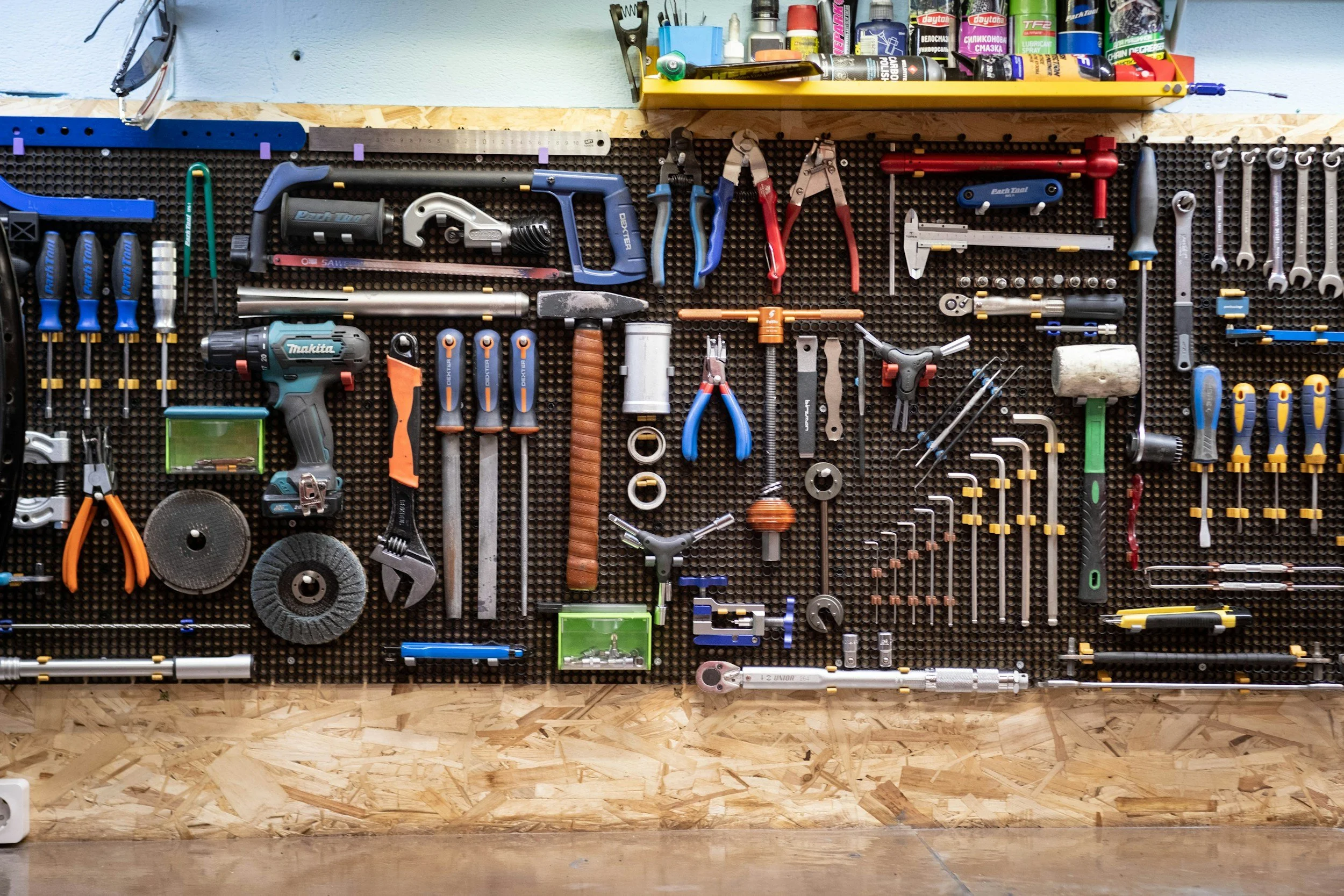
The communication toolbox.
I often think about communication through the lens of a tool-box. Each of us enters the world with an empty toolbox. As we move through life, we begin to fill it. Every relationship, family interaction, classroom, workplace, community, success, disappointment, and hardship teaches us something about how to navigate the world. Some of those lessons become tools. Some tools are intentionally given to us. Others are learned simply by watching those around us. Still others emerge from necessity. They are survival tools, developed because they helped us make it through difficult moments.
When I first purchased my home, I eagerly began hanging curtain rods, installing cabinet hardware, replacing doorknobs, and tackling every project, small and large. For each task, I reached for the same tool: my trusty screwdriver. I scrapped old paint and linoleum with the screwdriver. I popped open cans of paint with my screwdriver.
My father watched me work for a while before asking a simple question. “Why aren’t you using the drill?” He had purchased one for me. It was sitting nearby, charged and ready to use.
I hesitated. “No,” I replied. “The screwdriver works just fine.” And it did work. Eventually. Every screw went in. Every project was completed. But by the end of the day, my shoulders ached, my hands were sore, and every task had taken far longer than it needed to. It wasn’t that the screwdriver was the wrong tool. It simply wasn’t the best tool for every job. It was effective yet not efficient. The truth was that I wasn’t avoiding the drill because it was ineffective. I was avoiding it because it was unfamiliar. The screwdriver felt comfortable, predictable, and safe.
Eventually, my father encouraged me to try the drill. I was nervous. What if I damaged something? What if I couldn’t control it? What if I wasn’t good at using it? Within minutes, I realized the drill wasn’t nearly as intimidating as I had imagined. The projects became easier. They required less effort, less time, and far less physical strain. Nothing about the tasks had changed, but the tool I was using had.
That experience has stayed with me because it reflects something I see repeatedly in the way we communicate with one another. Many of us spend our lives relying on one or two familiar communication tools. Some people learn to communicate through force. The hammer becomes their favorite tool. When conflict arises, they become louder, more controlling, or more confrontational. Even when the situation calls for patience or curiosity, they continue swinging the hammer because it has worked before. Others become experts with the screwdriver. They carefully explain, overexplain, accommodate, or work harder than necessary to solve every problem. They expend enormous emotional energy because they have learned that effort feels safer than uncertainty. Some rely on pliers, constantly trying to fix everyone else’s problems. Others carry measuring tape, carefully evaluating every interaction before deciding whether it is safe to speak. Some carry a flashlight, constantly scanning for danger before deciding whether to participate at all.
None of these tools are inherently good or bad. Each one likely developed for a reason. At some point, every tool in our toolbox probably protected us. The challenge comes when one tool becomes our answer for every situation. A hammer cannot replace a drill. A screwdriver cannot replace a level. Likewise, communication requires flexibility. Listening requires different skills than persuading. Setting boundaries requires different skills than comforting. Curiosity requires different skills than advocacy. Repair requires different skills than conflict. Healthy communication is not about mastering one tool. It is about developing a toolbox full of options and learning which tool best fits the moment. Yet many of us struggle to reach for new tools, even when they are available.
Cognitive dysmorphia does not simply distort how we see ourselves. It distorts how we evaluate our own capacities to utilize our tools. Just as a crooked mirror reflects an inaccurate image, cognitive dysmorphia creates an inaccurate perception of what we are capable of doing. It convinces us that certain tools are beyond our reach, too dangerous to use, or somehow meant for someone else. The toolboxes may be full, but cognitive dysmorphia convinces us that they’re nearly empty. The drill sits untouched, even though it works, even though it’s ours. It sits untouched because we have become convinced that we are incapable of using it. That distortion changes our behavior. We begin reaching for the same familiar communication patterns simply because they feel the safest. We avoid difficult conversations because we believe we are “bad at conflict.” We become defensive because vulnerability feels dangerous. We remain silent because we assume our voice carries little value. We overexplain because we have learned that we must justify our existence before we deserve to be heard. These responses are often interpreted as personality traits. I believe they are more accurately understood as adaptive strategies. They are communication tools shaped by experience.
The irony is that the very tool we continue using often reinforces the distorted beliefs that caused us to choose it in the first place. If I continue using only the screwdriver, every project remains exhausting. My sore shoulders and aching hands seem to confirm that home improvement is difficult and that perhaps I simply am not good at it. But the problem was never my ability. The problem was that I was relying on the wrong tool.
Cognitive dysmorphia works the same way. Distorted beliefs influence the communication tools we choose. Those communication patterns shape the responses we receive from others. Those responses then reinforce the original distorted beliefs. “I knew they wouldn’t understand me.” “I knew conflict would only make things worse.” “I knew my voice didn’t matter.” “I knew I wasn’t enough.” The cycle repeats, not because the beliefs are true, but because they influence the behaviors that make them appear true. Breaking this cycle requires more than learning better communication skills. It requires changing our relationship with safety.
When we feel psychologically safe, our nervous system becomes more flexible. We become willing to experiment, tolerate mistakes, become curious, and take risks. Most importantly, we begin reaching for tools we have been too afraid to use. When we feel threatened, however, the opposite happens. Our world narrows. Our options shrink. Our nervous system stops asking, What is the best tool for this situation? and instead asks, What helped me survive before?
The person who usually communicates with curiosity becomes defensive. The person who generally collaborates becomes controlling. The person who typically speaks openly withdraws. The person who usually listens interrupts. This is not necessarily because they have forgotten healthier ways of communicating. Rather, stress has made those tools temporarily inaccessible. Understanding this fundamentally changes how we view ourselves and one another.
Instead of asking, “Why are they communicating like that?” we begin asking, “What tool are they reaching for right now, and what experiences taught them that this was the safest option?” That question does not excuse harmful behavior. Accountability remains essential. Boundaries remain necessary. Repair still matters. But understanding shifts us from judgment to curiosity.
Belonging is not created by demanding that people immediately abandon the only communication tools they have ever known. Belonging is created by building environments where people feel safe enough to discover new tools. Healthy communities become workshops rather than battlefields. People are allowed to practice and to make mistakes. To try the drill without fear of ridicule. To discover that there may be healthier, more effective ways of connecting than the ones they have always relied upon.
Over time, the goal is not to throw away the hammer or the screwdriver. Every tool has its place. There are moments when directness is needed and moments when precision matters. Wisdom lies not in owning one tool, but in knowing which tool the moment requires. Perhaps that is one of the greatest gifts belonging offers us. It reminds us that we are not limited to the tools we inherited. Every relationship marked by trust, every mentor who patiently teaches another way, every community that responds with curiosity instead of condemnation places another tool into our hands. And perhaps even more importantly, belonging helps us recognize that many of those tools were in our toolbox all along. The crooked room simply convinced us they were never ours to use.
J. Oladapo, July 2026